OPS Explorer
Welcome to the community home for optical pooled screening data. Deposit, discover, and explore OPS datasets across labs and organisms. This tool is currently in alpha. We welcome your feedback as we continue to build.
Visualize OPS Data
Browse and explore perturbation imaging data across screens, genes, and phenotypes. In a single integrated viewer, explore UMAP embeddings, volcano plots, and raw cell images together, moving fluidly from perturbation-level summaries to individual cell phenotypes.
OPS Explorer
Visualize Data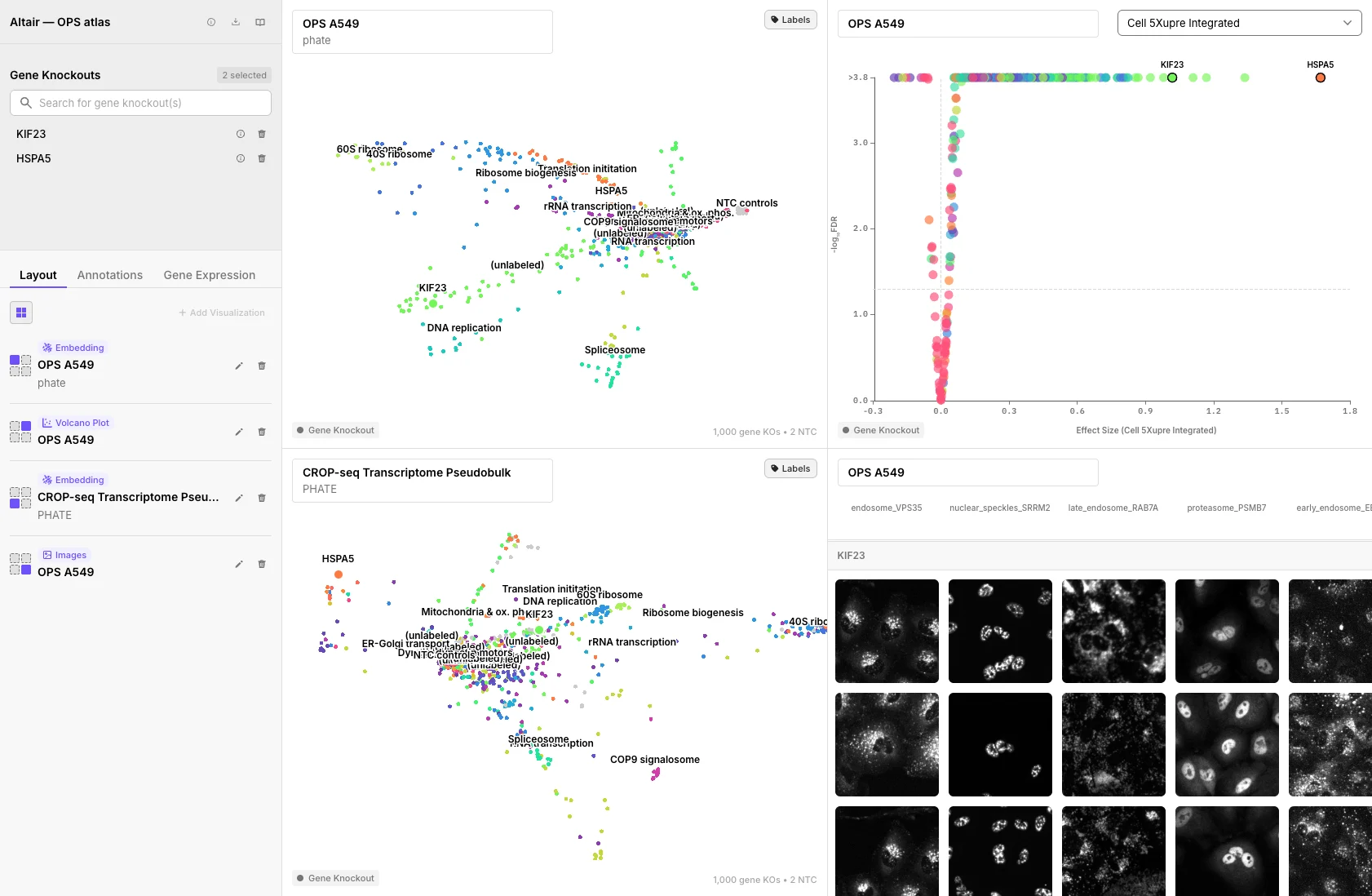
OPS Collections
Browse collections currently available in OPS Explorer. Each collection represents a complete OPS experiment. Ready to explore in the viewer across perturbations, markers, and cell images.
Aconcagua
- Tissue
- cell line cell
- Disease
- cervical adenocarcinoma
- Organism
- Homo sapiens
Altair - A549 1k
- Tissue
- cell line cell
- Disease
- lung adenocarcinoma
- Organism
- human
About OPS
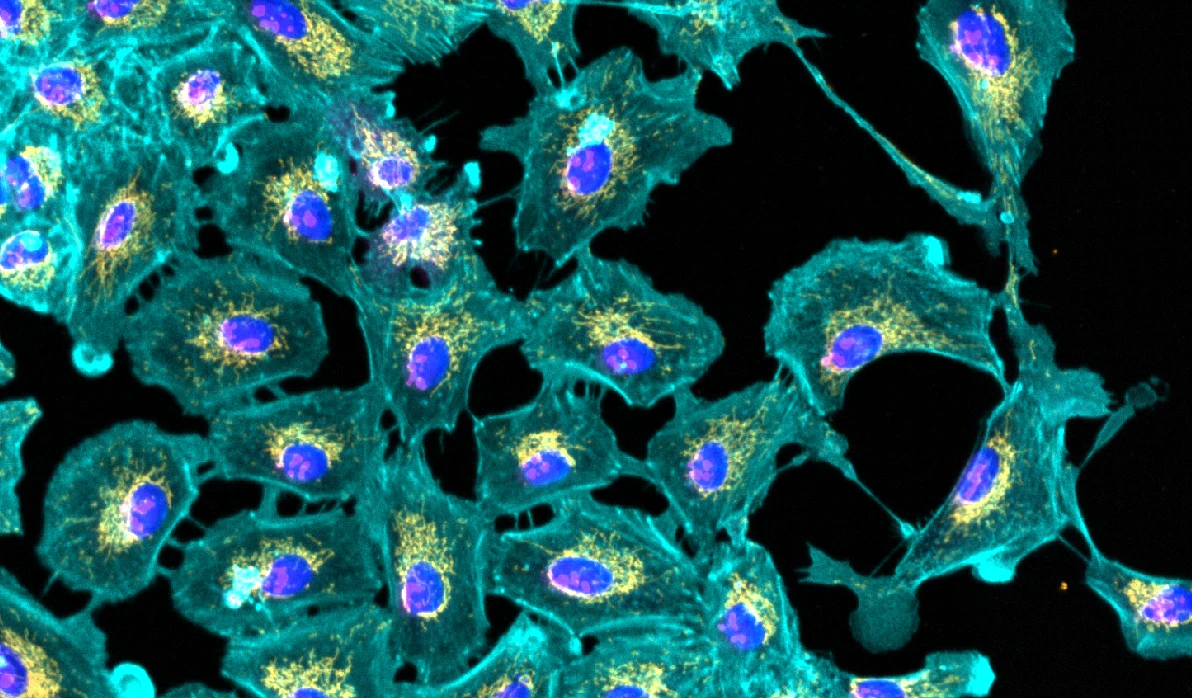
Optical pooled screening (OPS) is a high-content single-cell genetic screening technique that profiles cell phenotypes by optical microscopy, linking each cell's image to its genetic perturbation through in situ sequencing. By combining the scale of pooled CRISPR screens with the rich morphological detail of imaging, OPS enables simultaneous measurement of hundreds of phenotypic features across thousands of gene knockouts in a single experiment.
How the Data Comes Together
OPS data moves from lab bench to open portal through a community-driven process. Experiments, standardized processing, and open hosting work together to make data broadly useful.
Screen
Process & Standardize
Share & Access
Contribute Your Data
Have OPS data to share? We'll help get it into the standard and onto our platform. Contributors receive DOI-linked attribution, and all data is released under community-friendly licenses.
Share Your Feedback
This product is in alpha and we're actively refining it. Your feedback helps us improve. We'd love to hear what's working and what isn't.